
How Robotics in Manufacturing is Transforming Production Lines
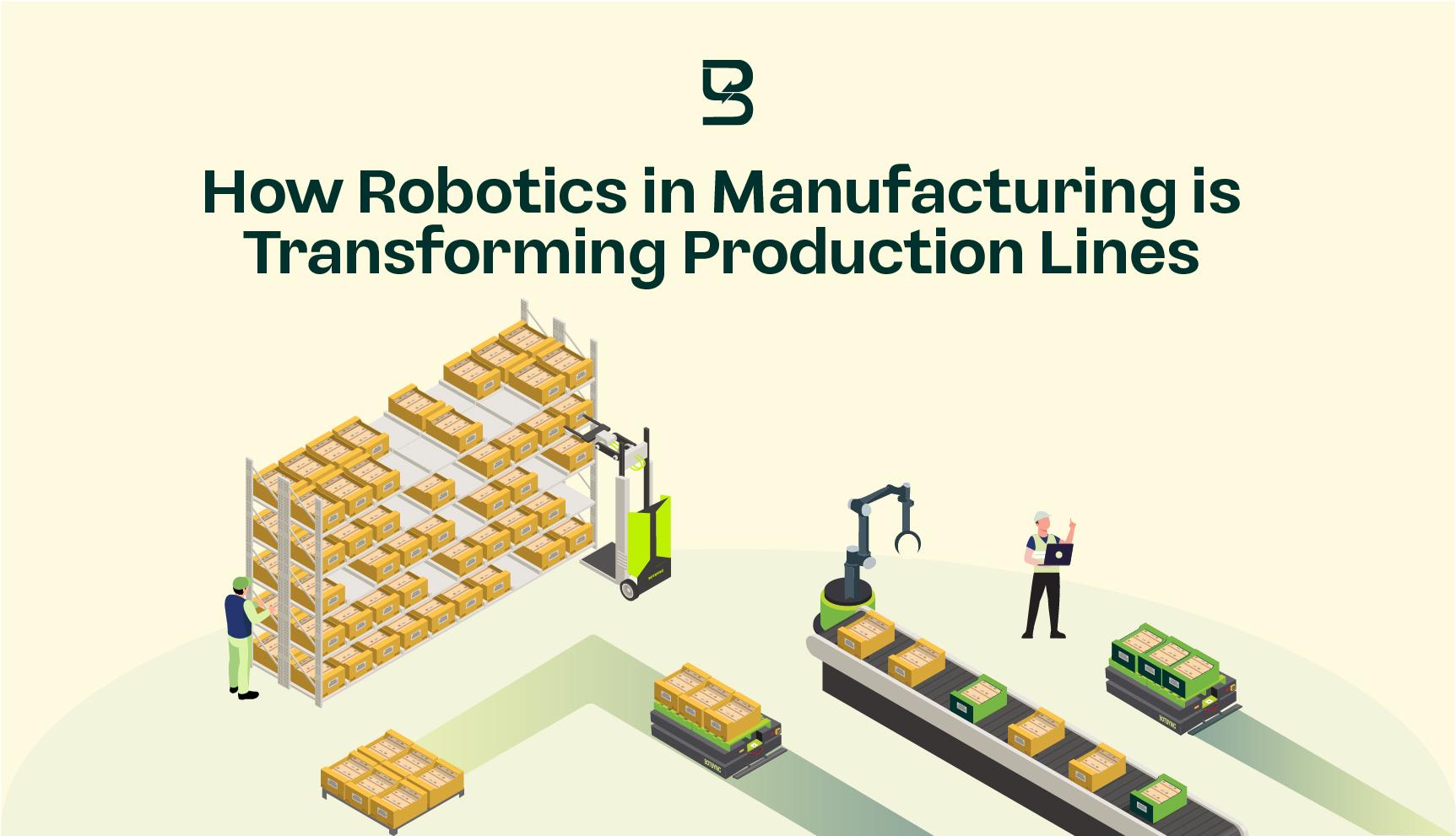
Discover how robotics in manufacturing equipment is revolutionizing production lines. Botsync explains the technology, benefits, and real-world applications.
Table of Contents
- –How Has Robotics in Manufacturing Equipment Evolved?
- –What Types of Robotics in Manufacturing Equipment Are Used Today?
- –What Are the Key Benefits of Implementing Robotics in Manufacturing Equipment?
- –How Are Robotics Transforming Production Lines in Real-World Applications?
- –How Does Fleet Management Enhance Robotics in Manufacturing Equipment?
- –What Are the Challenges in Robotics Implementation and How Can They Be Overcome?
- –What Does the Future Hold for Robotics in Manufacturing Equipment?
- –Conclusion
- –Frequently Asked Questions
Key Takeaways
Traditional manufacturing is under pressure. Rising labor costs, inconsistent quality, and production bottlenecks are pushing facilities to their limits. Manufacturers pulling ahead are deploying robotics as coordinated systems powered by intelligent fleet management. This guide explains the available technologies, benefits, applications, and how smarter orchestration maximises the investment.
How Has Robotics in Manufacturing Equipment Evolved?
Manufacturing robotics has progressed from fixed, single-purpose machines to flexible, connected, AI-enabled systems that can adapt to changing demand, share data with production systems, and operate as coordinated fleets instead of isolated machines.
How Has Robotics in Manufacturing Equipment Evolved?
What Types of Robotics in Manufacturing Equipment Are Used Today?
Different production challenges call for different robot types. Choosing the right system begins with understanding what each is designed to do.
1. Industrial Robotic Arms
Articulated robots, SCARA robots, and delta robots handle precision-intensive, high-speed tasks. Articulated arms dominate automotive welding and painting, SCARA robots excel at electronics assembly, and delta robots pick and place small components at speeds people cannot match.
2. Collaborative Applications
Collaborative applications enable robots to work safely alongside people in shared spaces. Force limiting, collision detection, and flexible no-code or hand-guided programming make them a practical entry point for small and medium manufacturers.
3. Autonomous Mobile Robots (AMRs)
AMRs transport components, work-in-progress, and finished goods without fixed infrastructure. LiDAR, computer vision, and SLAM enable real-time rerouting, while centralised fleet management coordinates larger fleets.
What Are the Key Benefits of Implementing Robotics in Manufacturing Equipment?
1. Increased Production Efficiency and Speed
Robotics supports faster cycle times and continuous, repeatable production. Industrial arms, SCARA robots, and delta robots each match different tasks and retain performance across thousands of cycles without fatigue.
2. Enhanced Quality and Consistency
Robots repeat motions with micron-level precision without drift or fatigue. In electronics and pharmaceutical packaging, defect rates in robotic production lines typically run well below 1%.
3. Improved Worker Safety
Robotics removes workers from heavy lifting, high-temperature work, hazardous material handling, and repetitive motions, reducing injuries and associated insurance costs.
4. Cost Savings Over Time
Payback commonly runs 18 to 36 months when labour, waste, and error costs are included. Over five to ten years, total ownership cost often favours robotics over manual operations.
How Are Robotics Transforming Production Lines in Real-World Applications?
1. Automotive Manufacturing
Robotic arms perform body welding, painting, and final assembly. Fleet software keeps multiple systems operating in sequence without conflict.
2. Electronics and Semiconductor Production
Cleanrooms, miniature components, and micron-level tolerances make electronics a demanding robotics application. High-speed pick-and-place systems complete thousands of placements per hour.
3. Food and Beverage Processing
Robotics handles raw materials, packaging, and palletising across multiple SKUs while supporting hygiene standards and adapting to different product sizes.
How Does Fleet Management Enhance Robotics in Manufacturing Equipment?
1. Fleet Management for Multi-Robot Operations
Most manufacturers use robots from more than one vendor. SyncOS™ provides a unified layer for multi-vendor AMR and AGV fleets, supporting real-time monitoring, task assignment, and traffic management.
2. Maximising Uptime with Predictive Maintenance
Fleet platforms analyse cycle counts, error frequencies, battery performance, and response times to identify issues before failures occur. Facilities using this approach report 15–20% less unplanned downtime.
3. Seamless Integration with Existing Systems
Open APIs, VDA5050, and pre-built MES and ERP connectors let orchestration platforms work alongside legacy systems, reducing technical risk and capital commitment.
What Are the Challenges in Robotics Implementation and How Can They Be Overcome?
1. Initial Investment and ROI Concerns
A phased approach begins in the highest-impact production area, proves ROI within the first 18 months, and uses operational savings to fund subsequent phases. Pilot cells reduce risk and build evidence for wider investment.
2. Workforce Training and Change Management
Robotics shifts people into safer, higher-skilled operations, programming, and maintenance roles. Structured training and clear communication are essential as output expands.
3. Technical Integration Complexity
Pre-built integrations, dedicated support, and phased deployment reduce the complexity of connecting new robotics to legacy systems. Initial deployment commonly takes eight to sixteen weeks.
What Does the Future Hold for Robotics in Manufacturing Equipment?
AI and machine learning are making robots more autonomous, predicting maintenance needs and adapting to production changes. Digital twins simulate layouts before investment, 5G enables reliable fleet coordination, and energy-efficient automation reduces waste and carbon footprint.
Conclusion
Robotics in manufacturing delivers measurable gains in efficiency, quality, safety, and long-term cost competitiveness. The greatest value comes from coordinating multi-vendor fleets, predicting maintenance needs, and integrating robot operations with broader production systems.
Frequently Asked Questions
1. What types of robotics in manufacturing equipment are most commonly used?
The most common types are industrial arms for welding, painting, and assembly; collaborative applications for shared workspaces; and AMRs for internal material transport.
2. How much does it cost to implement robotics in manufacturing?
Cobots start around $25,000 per unit, industrial arms range from $50,000 to $200,000+, and AMRs typically cost $30,000 to $100,000 per unit. Most implementations target 18–36 months payback.
3. Will robots replace human workers in manufacturing?
Robotics shifts workers from repetitive and physically dangerous work into robot operation, programming, and maintenance. Employment often remains stable or grows as output rises.
4. How long does it take to implement robotics in a production line?
A focused pilot cell typically takes eight to sixteen weeks from installation to live operation. Full rollout varies by complexity, while pre-built templates can shorten implementation.
5. What is robot fleet management and why does it matter?
Robot fleet management centralises monitoring, task assignment, and traffic control across mobile robots and vendors, enabling a more productive, visible, coordinated operation.
6. Can robotics integrate with our existing manufacturing systems?
Yes. Modern platforms use open APIs, VDA5050, and MES and ERP connectors to work with existing infrastructure without replacing it.