
The Challenges Of Working With Others
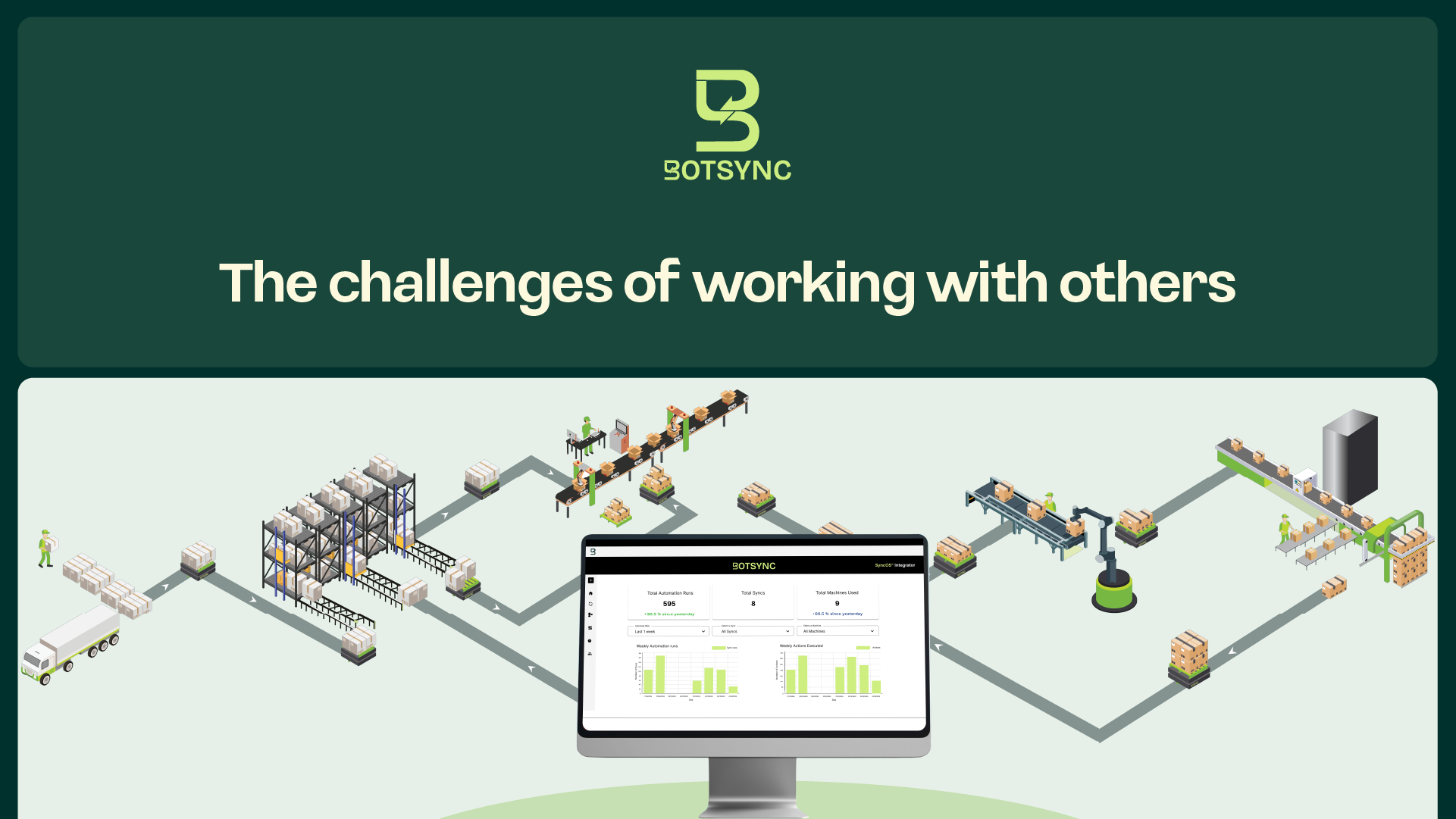
Discover how SyncOS™ simplifies automation integration by connecting robots, conveyors, WMS, ERP and other systems through one scalable, vendor-agnostic platform.
The challenges of working with others
For all its potential, automation isn’t without its headaches. Implementing a new automation system can feel like assembling a puzzle where none of the pieces are from the same set.
The Interoperability Challenge
Imagine this: You’ve invested in multiple robotic systems, each from a different vendor, all promising efficiency and speed. But instead of seamlessly working together, these systems speak different languages. The result? Integration hurdles, operational downtime, and a very frustrated team.
60% of IT and business decision-makers estimate their automation efforts involve 26 or more systems. That’s a lot of moving parts to manage. Couple that with the high upfront cost of automation, and businesses are often left wondering whether their investment will deliver the ROI they hoped for.
Here’s what typically goes wrong:
- –Interoperability Issues: Different systems don’t always play well together, leading to inefficiencies.
- –Complex Custom Integrations: Businesses spend months (and a lot of money) trying to make systems work cohesively.
- –Operational Disruptions: Deploying new tech often halts ongoing workflows, leading to costly downtime.
- –Fragmented Analytics: Inconsistent analytics from multiple systems make it hard to track performance or identify bottlenecks, leaving businesses in the dark about whether they’re meeting throughput targets.
- –Scaling issues: Even after managing all of this, business may have to do it all over again every time they want to grow their operations. It’s just not sustainable.
That’s why we created SyncOS™
As robotics manufacturers, we faced the same challenges and saw them as an opportunity. SyncOS™ isn’t just another automation platform—it’s an interoperable, no-code solution designed to make integration seamless, scalable, and smart.
Here’s how it works:
- –Centralized and Seamless Integration
SyncOS™ connects multiple systems—robots, conveyors, WMS, ERP and more—into one no-code interface, reducing integration timelines from months to days. It allows businesses to integrate new automation solutions without changing the existing ones.
- –Adaptability Without Complexity
One of SyncOS™’s standout features is its intelligent navigation and management systems. Operators can assign specific zones and rules for AMRs, ensuring they adapt dynamically to real-time changes. From dynamically assigning priorities based on workload to managing traffic in a busy facility, SyncOS™ ensures that operations stay fluid and efficient
And because it’s a no-code platform, anyone—whether a floor manager or an engineer—can adjust workflows without needing extensive technical expertise.
- –Future-Proof Design
SyncOS™’ modular, vendor-agnostic architecture means it’s built to grow with your business. Need to add a new system or robot? No problem. SyncOS’s pre-built integrations make scaling is effortless.This adaptability is critical for businesses navigating a constantly changing market.
- –Analytics That Work for You
Automation without data is like flying blind. SyncOS ™ aggregates analytics from multiple systems into a unified dashboard, providing both a holistic overview and granular insights into specific bottlenecks.
This means you’ll know whether you’re hitting your throughput targets, identify which part of the process needs attention, and track whether your automation investment is delivering the ROI you projected.
Automation That Adapts
At Botsync, we believe automation should solve problems, not create new ones. SyncOS™ embodies that philosophy, offering businesses a scalable, user-friendly platform that eliminates the guesswork and frustration of integration.
With SyncOS™, you don’t just automate—you build a system that grows, adapts, and thrives alongside your business.
Frequently Asked Questions
Do we need software engineers on-site to adjust SyncOS™ workflows? No. Its no-code interface lets floor teams adjust tasks, zones, and traffic priorities.